
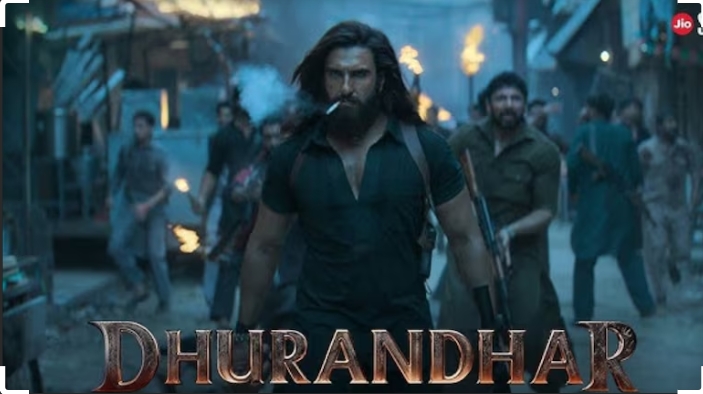
From the Gita verse, “Bharat Mata ki Jai” and “Asato Ma,” Dhurandhar does not disappoint. Many say the pro-Hindu trend began with the Bahubali films, and it is a well-known fact that Bollywood suffered a pathetic death during the Covid pandemic, when OTT platforms started streaming realistic, high-quality content worth watching. Gone are the scriptless days when the Khan personalities ruled the screens. The audience these days clearly refuses to be ignoramuses.
Indian Cinema
Director Aditya Dhar manages to cast Hindu males as Muslim characters, a total reversal of what the now-dead Bollywood has done for decades. The background score is familiar yet new; the dialogues are meticulous; the acting is believable; the clothes smell of secreted oils and sweat. The cultivation of fantastic Indian cinema has moved away from ‘liberal’ thought to the rise of the unapologetic, dharmic, Hindu male. Despite the semi-woke Ranveer Singh almost messing up the release by his derogatory imitation of Ma Chamundi from Kantara, the Goddess seems to have forgiven the faux pas and allowed him to get praise for his craft.
There can be no denial of the realities depicted in the film. From terrorist attacks to the corruption shown by ministers and those who try to cover up their deeds, the rot is shown to run deep. Those against the film have had issues with how the terrorist state of Pakistan is depicted in actuality, and will continue to have problems with the second part, where potential bhaccha-bazi and more violence will be shown. Who cares if the Gulf countries have banned the film? Pakistanis are downloading pirated copies by the truckload anyway; the ban has backfired.
Dharmic Moral Universe
If Animal was the rise of the Hindu male, then Dhurandhar is the return to order, dharma personified. Dhurandhar shows dharma not through lofty speeches, over-the-top dialogues, or slogans, but through the way the main characters behave. Instead of doing unbelievable physics-defying stunts, the main character lies low and learns from his Miyagi, who has been embedded in the Pakistani craphole for years, staying undercover, blending in, and selling juice day after day. These spies follow orders, stay silent, and focus on getting the job done – which is the only goal. This reflects the idea in the Bhagavad Gita that actual duty is to act; fruits come without expecting praise or reward. The film shows that being true to dharma is about doing the right thing, quietly.
The movie also shows swa-dharma through its treatment of power and violence. When the main character uses force, it is never shown as exciting or enjoyable. There is no celebration; the visceral moments aren’t sexualized or glamourised. Violence is depicted as serious, with real consequences. This teaches that even when force is necessary, it is exercised with a sense of responsibility and without aversion or emotional attachment. The low-ranking spy characters do not act as if they are above others or the larger system / natural law. They work within rules and are accountable for their actions. In Dhurandhar, dharma is self-control and discipline, where real strength lies in doing your duty without letting ego, unnecessary dance sequences, or excessive emotion take over.
Summing Up
Dhurandhar doesn’t ask for applause. It asks whether we are capable of sitting with the truth without whitewashing, digesting the red screen pill, so to speak. There are no fake heroes here, only men who do what must be done and disappear back into the unknown. No catharsis. No song-dance nor self-righteous ‘liberal’ moral preachiness. Just order, blood, silence, and consequence, all somehow justified. This isn’t Bollywood reborn, as some claim, but this is Bollywood continuing to be buried, deeper with every crore it earns, with every pirated download. And from its grave rises something older, colder, and far more realistic: dharma, stripped of Dawoodian trappings. Slowly, inevitably, public opinion would start nudging Bharatiya politics, at least one hopes.
- Dhurandhar’s Red-Pill Dharma: Rise of the Hindu Male - December 30, 2025
- Heeramandi: An Experiment in Islamic Wokeism - May 24, 2024
- Animal Film: Rise of the Hindu Male in Indian Cinema - February 3, 2024