
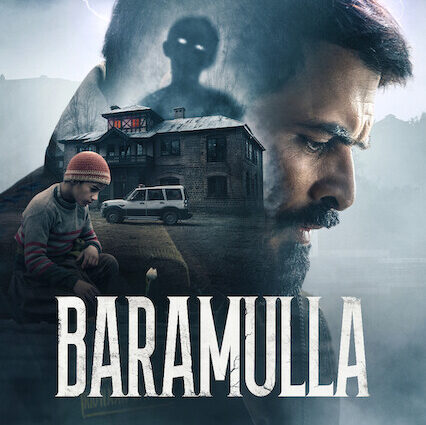
Baramulla film employs the supernatural not as typical horror, but as a device to showcase unresolved Hindu Pandit erasure and continued violence in Kashmir. Some call it political drama, some Sanghi cinema, but regardless, the supernatural is present, patient, and willing to impart justice. Set in the town of Baramulla, the film follows DSP Sayyed (played by a Hindu actor) as he investigates a series of child disappearances, with his family getting involved in the past and present landscape of Kashmir’s politics. Parallel to the procedural inquiry runs a haunting rooted in the past – an old haveli occupied by his family and other Atmans, that bears the memory of brutal violence.
The supernatural disturbances are traced back to the massacre of a Kashmiri Pandit family during the insurgency of the 1990s. These spirits are not portrayed as malevolent entities but as embodiments of unresolved trauma, seeking acknowledgement and also justice. By connecting present-day disappearances to past violence, Baramulla advances the argument that histories left unrecognized do not simply disappear; they return, demanding confrontation.
History of Varahmula
Baramulla, historically known as Varahamula, occupies an important place in Kashmir’s early Hindu sacred geography, with its name linked to the Varaha incarnation of Vishnu (the Boar Avatara) and references in Sanskrit chronicles. Before the forcible spread of Islam in the Valley, the region was soaked in a predominantly Shaivite and Vaishnavite cultural ethos, evidenced by temple ruins, iconography, and archaeological remains, as well as the recently unearthed Bhairava.
Hindu kings of Kashmir patronized Varahmula as a strategic and religious settlement, as the location allowed broader networks of pilgrimage, trade, and learning. The mass erasure and displacement of Pandits during the insurgency of the late 20th century thus represents a rupture in a civilizational continuity stretching back over a millennium, bringing one to the present-day film setting.
The film ends with the truth behind the hauntings and disappearances brought to light, allowing the restless spirits rooted in the unacknowledged massacre of a Kashmiri Pandit family to find justice/release. The resolution offers a moral reckoning, showing that peace emerges from recognizing historical injustice rather than erasing it.
What Now?
Decades after the forcible exodus of those who survived, many Kashmiri Pandits remain caught in a prolonged state of trauma, waiting, seeking justice, recognition, and the right to return to their homeland with dignity. While some have managed to rebuild their lives, others continue to live in temporary camps, weighed down by economic insecurity and plagued by intergenerational trauma. Again, no one seems to care.
Legal appeals for restitution and accountability have fallen on deaf ears, leaving an unsettling era and an echo of neglect. Without political will, displacement has become a shadow over everyday life, creating a painful normalcy. At the very least, we owe it to the Atmans, those jivas violently cut short, to grant their Pitru Paksha rites, honour their lives, and offer the peace that was so cruelly denied. Every single life erased by genocide deserves this dignity.
Baramulla grants the spirits cinematic closure, yet in real life, their community remains adrift. If only life could mirror art, justice might finally reach those who have waited for decades.
*Image sourced from the internet.

- Racist Christianity of Bo French Excludes Indian Christian Converts - September 15, 2026
- Due Process Denied: The Buck Stops with Modi - February 19, 2026
- Islamization of America: Zohran Mandani’s Nefarious Pet Project - February 11, 2026