
Civilizations often decline through a mix of internal decay and external pressures, eroding cultural memory and linguistic diversity. In the context of India, this manifests as the fragmentation of ancient languages, the fading of oral traditions, and a weakening collective identity. Historical patterns from the Indus Valley to modern times illustrate how neglect accelerates this process.
Patterns of Civilizational Decay
Civilizations fall when environmental shifts, invasions, or internal complacency disrupt core systems like agriculture and governance. In India, similar dynamics repeated with Islamic invasion and British colonialism, where resource exploitation and cultural imposition hastened erosion. Continuity persisted through adapted traditions, such as IVC motifs influencing later Hindu iconography.
Cultural Memory & Amnesia
Cultural memory refers to the shared knowledge, narratives, traditions, and practices that a group or society uses to connect its past with the present and future. It shapes collective identity through institutionalized elements like rituals, symbols, myths, and artefacts, distinguishing it from individual or short-term communicative memory.

Breakdown of collective cultural memory erodes the shared narratives, traditions, and lessons that bind societies together, fostering fragmentation and vulnerability to collapse. Civilizations rely on this memory to maintain social cohesion, transmit knowledge, and adapt to crises. When it fades, societies lose their “muscle memory” for governance, trust, and resilience.
Lost memory splinters declarative knowledge (facts) and affective bonds (unity), making collective action impossible amid threats. Societies devolve into short-termism, norm erosion, and inequality, as agents copy locally rather than preserving global wisdom. This vulnerability amplifies other collapse factors, such as economic breakdown or elite overreach.
As Pankaj Saxena rightly points out, “The problem of India today is of missing grandmothers. For culture to be transmitted, we need three generations of a family to live together.”
Cultural memory declines through deliberate destruction, like iconoclasm in revolutions or wars, which obliterate symbols and histories. It also fades via “amnesia” from rapid modernisation, where new generations disconnect from ancestral customs, leading to a “slippage of the present into a historical past”.
For instance, modern cases like the ISIS or the Khmer Rouge targeted heritage to annihilate identity, mirroring broader societal “entropy.”
Aztec civilization fragmented after the Spanish conquest destroyed codices and elites, severing procedural and emotional memory, unlike Japan’s adaptive preservation during modernization.
European shifts post-Enlightenment prioritized reason over memory, culminating in 20th-century revolts that shredded traditions.
Language Shift in India
Language shift in India has profoundly eroded cultural memory by severing ties to oral traditions, folklore, and ancestral knowledge embedded in regional tongues. Colonial imposition of English and post-independence negligence accelerated this, marginalising over 700 indigenous languages and dialects. As communities adopt dominant languages for economic mobility, intergenerational transmission of myths, rituals, and ecological wisdom fades, weakening collective identity.
India’s Linguistic Diversity Under Strain
In India, regional tongues like Tulu or Garhwali are facing the risk of cultural loss. Oral traditions, once vital for memory transmission via epics like Ramayana, now compete with digital media, diluting intergenerational recall. Colonial policies suppressed vernaculars, fostering a “cultural erosion” where communities neglect roots, as seen in suppressed tribal songs and hagiographies.
Colonial Legacy’s Impact
British rule elevated English as the language of power, creating an elite disconnected from vernacular roots and fostering linguistic hierarchies. This shift disrupted the transmission of epics like the Mahabharata in regional forms, as English-medium education prioritised global narratives over local ones. Post-Partition, diaspora groups like Sindhis adapted by shifting to Hindi or Devanagari scripts, preserving identity but diluting linguistic specific memories.
Case Studies: Mithilakshar & Sharda Scripts
Loss of Mithilakshar and Sharda script exemplifies how the erosion of cultural writing systems severs a society’s link to its historical knowledge, traditions, and identity, mirroring broader breakdowns in collective memory that weaken civilizations.
Mithilakshar’s Decline
Mithilakshar, or Tirhuta, served as the traditional script for Maithili in the Mithila region across Bihar, Jharkhand, and Nepal until the 20th century. Governmental decisions, such as Nepal’s monarchy removing Maithili from official use and India’s state divisions without language patronage, accelerated its abandonment. Lack of printing typefaces and digital support shifted communities to Devanagari, Hindi, or Latin scripts for practicality, leading to near-total disuse by the 1980s-2000s and risking the loss of ancient manuscripts.
Sharda Script Loss
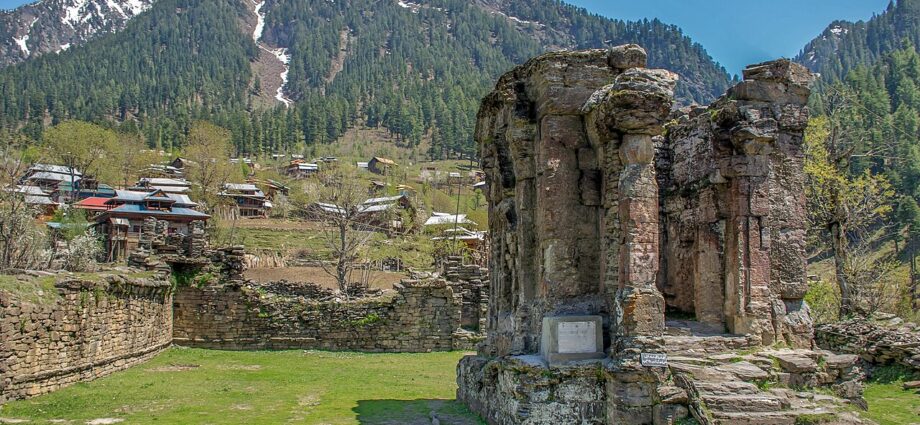
Sharda, prevalent from the 8th-12th centuries in Kashmir and northwest India for Sanskrit and Kashmiri, faded after the 13th century due to regional script divergences and Persian script imposition in the 19th century. By the 1950s, it became state-official in Kashmir, marginalising Sharda to ceremonial use among Kashmiri Pandits amid political turmoil and conflict. Birch bark manuscripts, vulnerable to tropical decay, left scant evidence, disconnecting later generations from philosophical and mathematical heritage. These scripts encoded procedural knowledge and emotional ties to heritage; their loss fostered “cultural amnesia,” fragmenting identity and enabling external influences to dominate.
Indigenous Language Loss
Tribal dialects such as Aka-Kora in the Andamans or Angika in Bihar face extinction due to urbanization and media dominance, carrying irreplaceable knowledge of biodiversity, rituals, and social norms. Language death fragments cultural memory, as younger generations lose idiomatic expressions and metaphors that encode worldview, leading to alienation from heritage. This mirrors broader patterns where Hindi-English bilingualism undermines social cohesion in multilingual India.
Modern Challenges
Globalisation and digital media further entrench major languages, reducing the “social worth” of minority tongues and halting oral histories’ flow.
Foreign Invasions
Foreign invasions often act as catalysts for civilizational decay by exploiting existing internal weaknesses, such as economic strain or political instability. They disrupt core systems like population stability, resource flows, and social cohesion, leading to long-term decline.
Successive Order of Decay
Invasions drain resources through prolonged warfare, depleting manpower and finances needed for defence and governance. Destroyed infrastructure, like trade routes and agriculture, triggers famine and economic collapse, while mass killings reduce the population irreversibly. Cultural imposition by invaders erodes traditional institutions, fostering social upheaval and loss of legitimacy.
Historical Examples
The Western Roman Empire fell partly due to barbarian invasions that overwhelmed stretched borders and internal divisions. Mongol conquests in the 13th century devastated China, Persia, and Mesopotamia, halving populations via war and famine while ruining irrigation systems. The Gupta Empire in India weakened under Huna invasions, leading to administrative fragmentation.
When the roots of culture fade, the land turns dry & barren. As long as values shine, darkness can never dare. Attackers understood it with the chilling precision that civilizations do not fall by swords alone. They fall when their memory is left unguarded. So they struck not just our people, but our universities, libraries & knowledge systems, having a sense that if memory breaks, then civilization bends.
– Gautam Adani.
Individual Negligence
Individual negligence toward culture undermines the shared values and practices that sustain civilizations, leading to internal erosion over time. When people prioritise personal gain over collective heritage, societies lose cohesion and adaptability. This process accelerates decay by fostering moral drift and vulnerability to external pressures.
Urbanization and individualism erode heritage sites and communal bonds, as people overlook traditional practices for modern convenience . This cultural rot manifests in polarisation and flawed collective thinking, reducing a society’s adaptive capacity. Systems theory highlights how failure to self-correction —rooted in personal neglect—leads to inevitable downturns in prosperity and unity.
Rome and Persia collapsed partly due to cultural imitation and loss of identity, where citizens neglected their foundational spirit for foreign influences. Andalusia’s decline involved moral infidelity and prejudice, amplified by personal neglect of cultural duties. Carthage fell despite economic strength because deceit and exploitation became normalised through individual ethical lapses.
WAYS AHEAD FOR CONSERVATION
Some ways which can preserve cultural memory & prevent cultures from being erased are –
Community Involvement
Local communities drive preservation by owning their heritage through festivals, storytelling, and artisan guilds that pass down skills orally. Engaging youth in these activities fosters pride and continuity, countering external media dominance. Government support via grants ensures grassroots initiatives remain funded without foreign strings attached.
Digital Archiving
Digitisation of languages, rituals, and artefacts in secure, local servers to create immutable records immune to physical decay or invasion. Tools like community-led apps for oral histories protect intangible heritage from dilution, as seen in indigenous archiving projects. Avoiding global platforms prevents algorithmic promotion of foreign content.
Policy Changes
Mandate cultural history in schools to instil values early, using native languages and curricula that highlight civilizational achievements. Policies like content quotas for media and restrictions on foreign NGOs preserve narrative control, mirroring successful models in China and Russia. To legislate a legal framework to protect sacred sites from commercial exploitation.
Selective Cultural Exchange
Curate exchanges that import technology without ideologies, such as skill-based apprenticeships abroad. Promote tourism showcasing authentic practices to generate revenue and global respect, balancing openness with vigilance against cultural appropriation. This sustains vitality without decay. Minor adoption of modernity while being entangled to the core of indigenous values can also be an alternative.
References:
- Cultural Memory & Early Civilization : Jan Assmann
- Bodha – bodharesearch.in
- Business Today- Gautam Adani warns, “Civilizations do not fall by swords”.
- Pankaj Saxena’s Facebook posts.
Featured image of Sharda Peeth in Pakistan-occupied Jammu and Kashmir sourced from the internet.

- KRANTAS & KULĀS: MAPPING THE SHAKTA SECTS OF BHĀRAT - March 28, 2026
- KSHARAN-BODH (क्षरण-बोध): How do Civilizations Fall & Decay? - January 17, 2026
- BHĀRAT: EVOLUTION OF A DYNAMIC & DIVINE RĀSHTRA - September 12, 2023